
 Ahad Khan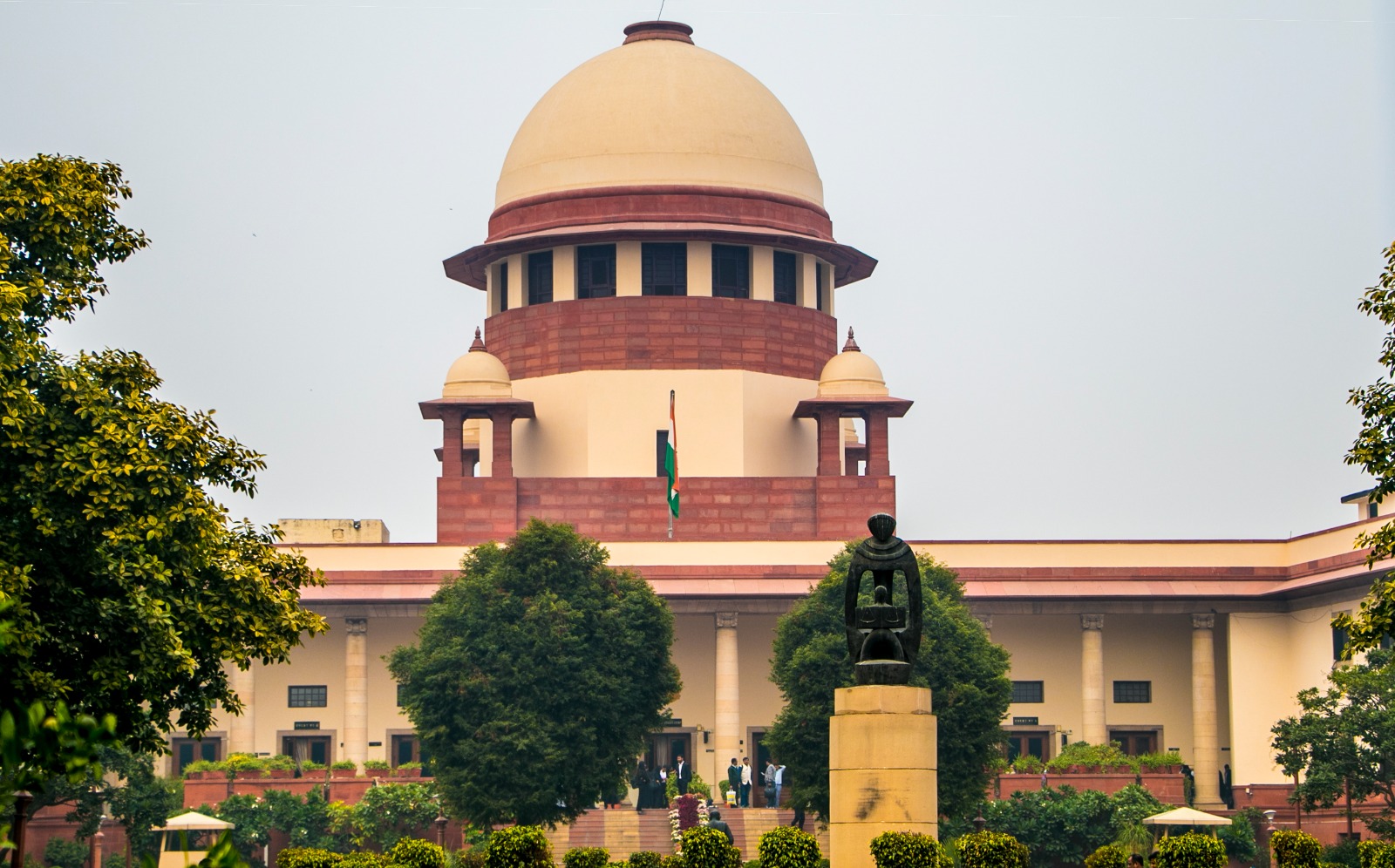
Photo: Supreme Court of India, Subhashish Panigrahi, CC BY-SA 4.0
On May 20, 2026, the Supreme Court of India delivered a definitive legal clearance regarding the upcoming national census. A three-judge bench, led by Chief Justice of India Surya Kant, officially dismissed a Public Interest Litigation (PIL) that sought to block the government from counting castes during the upcoming data collection.
When the petitioner argued that collecting this data was unnecessary and dangerous, Chief Justice Surya Kant responded with a blunt, common-sense question: “What is wrong with it? Any day’s government must know how many people are backward class and what kind of welfare measures are to be taken for them.”
Judges Are Not Policy Makers
The primary reason the Supreme Court threw out the petition is rooted in constitutional boundaries. The bench, which also included Justices Joymalya Bagchi and Vipul Pancholi, made it clear that deciding how to conduct a national population survey is a job for the elected government, not the judiciary.
Under the Census Act of 1948, the central executive branch holds the explicit legal power to determine what data needs to be collected to run the country. The Supreme Court used this “policy domain” defense to draw a sharp line between a judge’s courtroom and a prime minister’s cabinet. The court essentially reminded citizens that it is not the job of judges to act as political referees or micromanage how a government counts its population, as long as the action fits within existing laws.
Logic of Welfare: You Can’t Fix What You Don’t Measure
Past the technical legal boundaries, the Supreme Court’s ruling highlighted a very realistic, administrative truth: a modern state cannot function effectively without accurate data.
The petitioner argued that the government already possesses enough data to run the nation. However, the bench recognized that relying on outdated statistics, some of which trace back to colonial-era counts from 1931 makes it incredibly difficult to design modern welfare programs.
Whether a government is allocating state budgets, setting up targeted educational scholarships, or building local infrastructure for marginalized communities, it needs precise, verifiable numbers. From an objective governance standpoint, the court viewed the caste census not as a divisive political weapon, but as a practical administrative tool required to ensure state resources are distributed transparently and equitably.
“Misuse” Argument
A major pillar of the challenge against the survey was the fear of exploitation. The petitioner, appearing in person, argued that allowing the state to collect detailed caste data would create social friction and that the statistics could easily be misused by local politicians or corporate giants to manipulate the public.
The Supreme Court flatly rejected this argument. The bench indicated that it had no reason to doubt that the state, guided by independent domain experts, has the capacity to design a secure system to prevent data leakages and errors.
This point is especially crucial given the nature of the upcoming census. It is set to be India’s first fully digital population count, meaning that the responsibility lies on the government to build automated data protections rather than shutting down a necessary national exercise out of fear.
Conclusion
Supreme Court’s verdict marks a crucial moment in India’s administrative history. By dismissing the challenge against the caste census, the judiciary did not take a political side; instead, it protected the balance of power within Indian democracy. The ruling cuts through the everyday political shouting matches to remind the public of a basic constitutional fact: data collection is a function of governance. For a country to uplift its backward classes, it must first be allowed to count them, and the framework for that counting belongs firmly in the hands of the people’s elected representatives.