
 Ahad Khan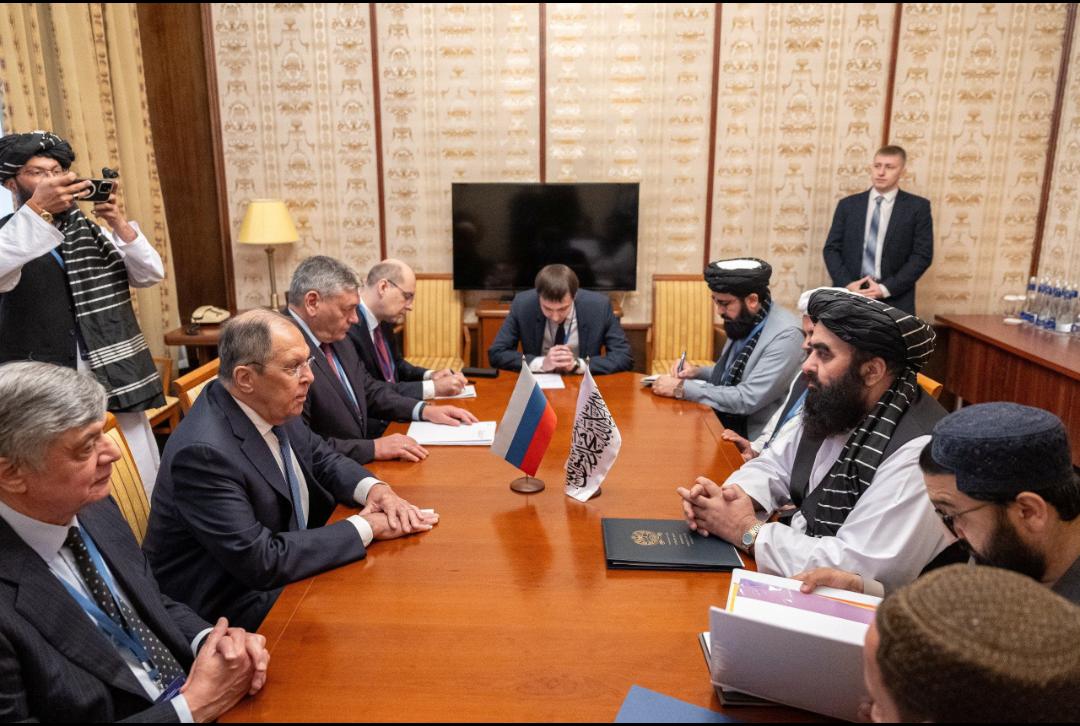
Image credit: Mario nawfal by X
On May 27, 2026, a defense deal was signed in Moscow that completely rewrote the security rules of South Asia. Russian Security Council Secretary Sergei Shoigu and Taliban Defense Minister Mohammad Yaqoob Mujahid formalized a military-technical cooperation agreement.
On the surface, both countries are playing it down. They claim the deal is strictly practical, Russia is simply helping Afghanistan repair its massive fleet of aging, Soviet-era military hardware, including over 100 Mi-17 helicopters and 30,000 heavy trucks. But in global politics, there is no such thing as a “strictly mechanical” defense deal with a superpower.
By setting up a legal framework for future weapons transfers and military training, Russia has done something monumental: it has given the Taliban government a massive shield of global legitimacy. But while Kabul celebrates, the real panic is setting in across the border in Islamabad. This single agreement systematically strips Pakistan of its historical leverage and hands a unique strategic advantage to India.
Nightmare on Pakistan’s Western Border
For nearly thirty years, Pakistan’s military elite operated under a doctrine called “strategic depth.” The goal was simple: keep a weak, dependent government in Kabul that Pakistan could control, ensuring their western border was always secure so they could focus entirely on India.
When the Taliban took over in 2021, Islamabad expected absolute loyalty. Instead, they got a geopolitical nightmare. The Taliban refused to recognize the Durand Line (the border drawn by the British), and cross-border terrorism began tearing through Pakistan. Tensions got so bad that earlier this year, the two sides engaged in heavy border skirmishes and unilateral Pakistani airstrikes inside Afghanistan.
This new Russian deal completely shatters Pakistan’s leverage. The Taliban no longer needs Pakistan as its sole gateway to the world. Following the signing in Moscow, Taliban leadership openly hinted that this new Russian alliance serves as a direct deterrent against external attacks, a clear, unsaid warning to Pakistan. With Russian engineers upgrading Afghanistan’s military strength, Pakistan can no longer bully Kabul without risking a direct diplomatic conflict with Moscow.
Moscow’s Cold, Hard Pragmatism
Why is Russia doing this? It isn’t out of affection for the Taliban. It is pure, cold pragmatism.
Ever since Russia formally removed the Taliban from its terrorist list in July 2025, the Kremlin has been looking for a local enforcer to secure its Central Asian backyard against terrorist groups like ISIS-K. Instead of sending Russian boots to the ground, Moscow is choosing to arm and stabilize the Taliban to do the dirty work.
But the deal goes beyond security. Russia wants direct access to Afghanistan’s massive, untapped lithium and copper reserves, and they are building the Trans-Afghan transport corridor to open up new trade routes. In the past, Russia had to use Pakistan as a bridge to deal with Afghanistan. Today, Moscow is bypassing Islamabad entirely, dealing directly with Kabul, and leaving Pakistan economically and diplomatically sidelined.
Silent Strategic Win for India
While Pakistan finds itself economically broken, trapped in border conflicts, and geopolitically isolated, New Delhi is watching this play out with quiet satisfaction.
For India, a Pakistan-controlled Afghanistan was always a massive security threat. But the total collapse of the Pakistan-Taliban relationship completely changes the equation. Pakistan is now forced to split its military focus and resources across two hostile borders, India on the east, and an increasingly confident, Russian-backed Afghanistan on the west.
Furthermore, India has always faced a massive geopolitical roadblock: Pakistan has historically blocked Indian trade from accessing Central Asia. Now, as Russia moves in to stabilize Afghanistan and build direct infrastructure, a massive window of opportunity opens for New Delhi. India can leverage its historically strong, trusted relationship with Russia to safely secure economic and diplomatic footprints in Central Asia, completely bypassing Pakistan’s blockades.
Conclusion
The old rules of South Asian geopolitics are dead. Pakistan’s decades-long strategy of trying to control its neighbor has completely backfired. By opening the door for Russian weapons, training, and economic infrastructure, Kabul has achieved true independence from Islamabad.
Pakistan is left holding an empty wallet and a massive security headache, while India finds itself in a highly favorable position, watching its primary rival get systematically squeezed by the very neighbor it tried to control.