 Hency Kushwah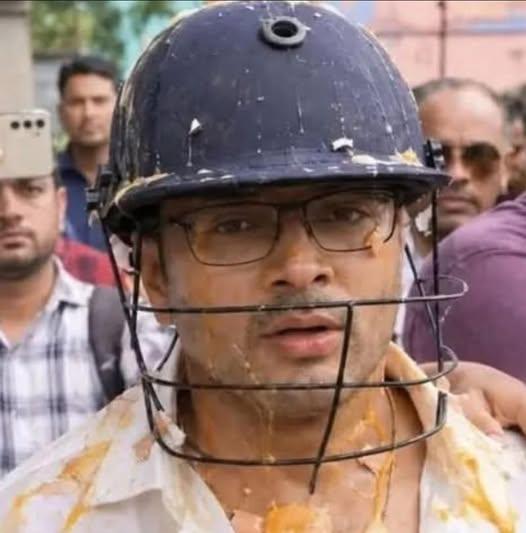
Image credit: Abhishek Banerjee/Facebook
When Political Change Meets Street-Level Retribution
“Rulers Became Killers”- Mamta Banerjee’s statement on the attack on Abhishek Banerjee holds true when democracies are designed to settle political disputes through ballots, legislatures, and public debate. When disagreements begin to spill onto the streets and manifest as physical attacks on elected representatives, the issue ceases to be a partisan controversy and becomes a question of democratic health.
The recent attacks on Trinamool Congress leaders Abhishek Banerjee and Kalyan Banerjee have therefore triggered concerns that extend beyond immediate political rivalries. While both incidents have predictably become subjects of political accusation and counter-accusation, they also raise a deeper question: what happens when political transition is accompanied by an atmosphere of public hostility and retaliatory mobilisation?
West Bengal, a State with a long and turbulent history of political confrontation, now finds itself confronting that question once again.
A Disturbing Sequence of Events
The controversy began after Trinamool Congress National General Secretary and Member of Parliament Abhishek Banerjee was allegedly attacked during a visit to Sonarpur. The incident reportedly occurred while he was visiting the residence of a party worker who had allegedly been killed in post-poll violence.
Police subsequently registered a Suo motu FIR and arrested multiple individuals after examining video footage of the incident. Since no formal complaint was filed by Banerjee himself, law enforcement initiated proceedings independently.
Before the political temperature surrounding that incident could cool, another confrontation emerged in the Hooghly district. Senior Trinamool leader and Member of Parliament Kalyan Banerjee was reportedly mobbed near Chanditala while on his way to submit a deputation. The veteran parliamentarian later alleged that an object was hurled at him, causing injuries to his head and chest. Together, the incidents have amplified concerns about the deteriorating nature of political engagement in the State.
Beyond Party Politics: The Normalisation of Political Aggression
The significance of these incidents lies not merely in who was targeted, but in what such attacks represent.
In any democratic system, elected representatives are expected to face criticism, protests, and public scrutiny. Those are natural consequences of public office. Physical intimidation, however, belongs to an entirely different category. Once political disagreements begin translating into mob action, democratic competition risks being replaced by coercive politics.
What makes the situation particularly concerning is the broader context in which these incidents occurred. Since the change in political equations in West Bengal, reports of confrontations involving local political workers have become increasingly common. Each incident may have its own local dynamics, but collectively they create an atmosphere where political violence appears less exceptional and more routine.
Such a trend is dangerous, irrespective of which party is in power or opposition. Democracy requires acceptance of political differences. It cannot function effectively if rival supporters begin viewing physical confrontation as a legitimate form of political expression.
The Hospital Controversy and Questions of Institutional Independence
The aftermath of the attack on Abhishek Banerjee generated a second controversy that may prove equally significant.
Trinamool Congress leadership alleged that private hospitals were subjected to pressure regarding the admission and treatment of the injured parliamentarian. According to these allegations, doctors had recommended medical tests and observation, yet admission was reportedly denied on the grounds that the injuries were not serious.
Whether these allegations are ultimately substantiated or not, they have revived concerns regarding institutional autonomy. Hospitals, like courts, universities, and investigative agencies, derive public trust from their perceived independence. Medical decisions must be guided by professional judgment rather than political considerations.
The controversy, therefore, extends beyond healthcare. It touches upon a fundamental democratic principle that public institutions must remain insulated from political influence, regardless of the identity of the patient or the party involved.
A Test for the New Political Order
The incidents have also become an early test for West Bengal’s evolving political landscape.
Political transitions often generate heightened emotions. Supporters celebrate victories while opponents struggle to adapt to changed circumstances. However, mature democratic systems distinguish between electoral competition and political vendetta.
Several leaders across the political spectrum have condemned the attacks while simultaneously offering differing explanations for the public mood that may have contributed to them. Yet regardless of the motivations cited, democratic accountability cannot coexist with mob justice.
If political grievances exist, they must be addressed through legal mechanisms, electoral processes, and institutional forums. Allowing public anger to manifest through physical intimidation risks creating a cycle in which every change of power becomes accompanied by retaliation.
History shows that such cycles rarely remain confined to one political party. Once normalised, they eventually affect everyone.
Conclusion: Democracy Cannot Be Defended Through Intimidation
The attacks on Abhishek Banerjee and Kalyan Banerjee are significant not merely because prominent political figures were involved, but because they highlight a larger challenge facing democratic politics. Political power changes hands. Governments rise and fall. Public anger fluctuates. Democratic institutions, however, are expected to endure beyond these temporary shifts.
West Bengal’s political history has often been marked by intense ideological battles. The challenge before the State today is whether it can move beyond that legacy and strengthen a culture where political rivalry remains fierce but peaceful.
Because in a democracy, the legitimacy of an argument should be determined by public support, not by the force of a crowd.