Photo: Jahanzin wesa by X
UN Says Life in Afghanistan Is Becoming More Difficult Every Day
A new United Nations report has revealed a heartbreaking picture of life in Afghanistan under Taliban rule. The report, presented at the Human Rights Council in Geneva, says that the condition of ordinary Afghans , especially women and girls has become far worse between August 2025 and January 2026.
According to the report, fear, poverty, restrictions, and human rights violations are growing rapidly across the country. UN Human Rights Chief Volker Türk called Afghanistan “a graveyard for human rights” and warned that millions of people are suffering silently.
The UN estimates that around 21.9 million Afghans, nearly half of the country’s population, will need humanitarian aid in 2026. The situation has become even more serious because of cuts in international funding, severe drought conditions, and the return of almost three million Afghan refugees from neighbouring countries.
Women and Girls Are Losing Their Freedom
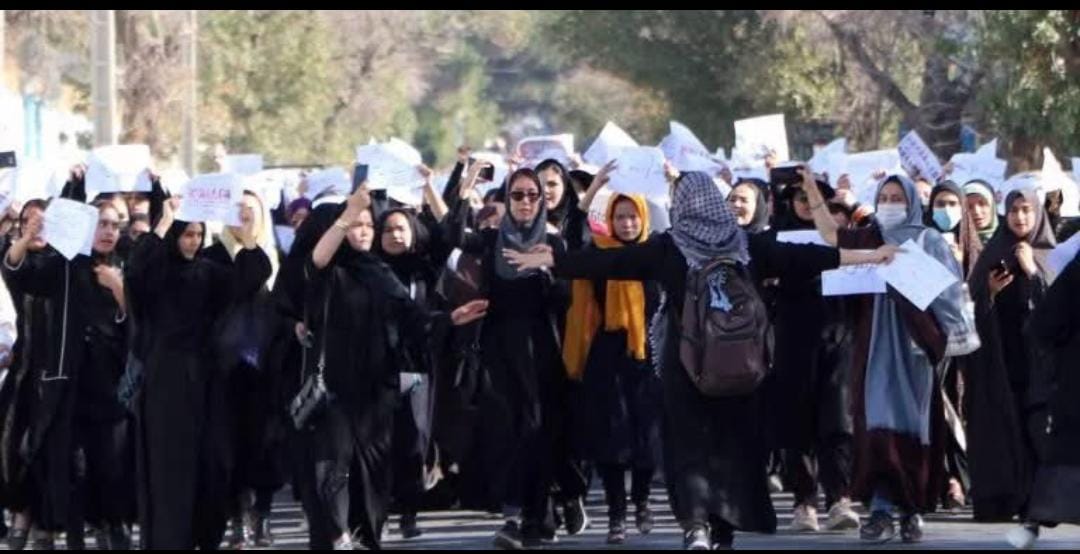
The report says women and girls continue to face the harshest restrictions under Taliban policies. Since the Taliban returned to power in 2021, women have slowly been pushed out of schools, workplaces, and public life.
Girls are still not allowed to study beyond sixth grade, and universities remain closed for women. Female students were also banned from taking medical graduation exams for the second year in a row after women were stopped from attending medical institutes in 2024. Experts fear this could create a serious shortage of female healthcare workers in the future.
Women who once worked in government offices have also lost their jobs. Many female civil servants had already been ordered to stay home since 2021 while receiving small salaries. In January 2026, they were informed that even those payments would stop and their jobs had officially ended.
Daily life has also become more difficult for women. In many areas, women are forced to follow strict dress rules and wear a chador in public. Women who do not follow these rules are sometimes denied access to buses, markets, and public places.
The Taliban has also continued its ban on beauty salons. In another shocking move, books written by women were removed from bookstores, libraries, and universities in several provinces, no matter what the subject was. Subjects like human rights and gender studies are no longer allowed to be taught.
“Volker Türk said the Taliban has effectively removed women and girls from public life”.
Media, Internet, and Freedom of Speech Under Attack
The UN report also highlights growing restrictions on journalists and humanitarian organizations working in Afghanistan.
Since September 2025, Afghan women working for the United Nations, including staff members and contractors, have not been allowed to enter UN offices. This has made humanitarian work much harder across the country.
Freedom of speech has also suffered badly. Journalists continue to face arrests and intimidation because of the content they produce. Political talk shows have been banned since February 2025, while music and drama programs are no longer allowed on television or radio.
Women journalists face even greater discrimination. In one incident mentioned in the report, a female journalist’s microphone was deliberately switched off during an official Taliban press conference.
In September 2025, Afghanistan also experienced a nationwide internet and mobile network shutdown for 48 hours. Hospitals, emergency services, airports, and banks were badly affected. The Taliban did not provide any official explanation for the blackout.
Public Punishments Continue Across the Country
The UN strongly criticized the Taliban for continuing public executions and corporal punishments.
Since returning to power in 2021, the Taliban has reportedly carried out 12 public executions, including two during the latest reporting period. Some executions took place in sports stadiums in front of large crowds.
Public floggings are also being carried out regularly across Afghanistan, raising serious concerns among international human rights organizations.
At the same time, violence near the Afghanistan-Pakistan border has increased sharply. The UN Assistance Mission in Afghanistan reported that Pakistani military operations caused 70 civilian deaths and 478 injuries during the final months of 2025.
The deadliest week occurred between 10 and 17 October 2025, when cross-border tensions led to more than 500 Afghan civilian casualties.
UN Demands Immediate Change
The United Nations has called on Taliban authorities to immediately remove all discriminatory rules against women and restore their rights to education, work, and freedom.
The report also demands an end to arbitrary arrests, public punishments, and restrictions on free speech.
The UN further appealed to countries around the world to stop forcibly sending Afghan refugees back to Afghanistan, warning that many returnees could face torture, persecution, or other serious dangers.
The international community has also been asked to support investigations into possible international crimes in Afghanistan. The International Criminal Court has already taken steps toward accountability by issuing arrest warrants in 2025.
In December 2025, the civil society-led People’s Tribunal for Women of Afghanistan symbolically declared Taliban authorities guilty of crimes against humanity, including gender persecution and gender apartheid.
Volker Türk strongly supported efforts to officially recognize “gender apartheid” as an international crime.
Ending the report with a powerful message, he said Afghanistan cannot build a better future while excluding women and girls from society.
“Women and girls are the present and the future, and the country cannot thrive without them,” he said.
Yeh article aapko kaisa laga?